
More than a decade after earning his GED through Project Learn, Doug returned to encourage a new generation of graduates while continuing a journey that has taken him from college to doctoral studies and a career serving others.
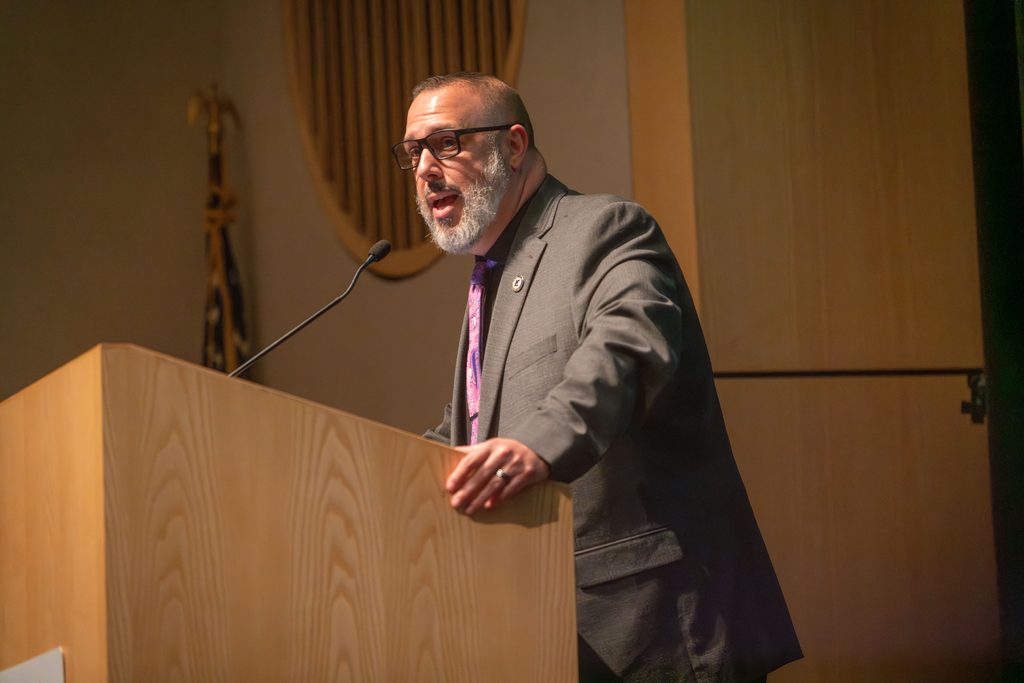
“Your past does not define you.”
— Doug
More than a decade after Doug Kirchner came to Project Learn as a student, he found himself back in front of a new group of graduates.
This time, he wasn't there to earn a credential.
He was there to speak.
Doug returned for Project Learn’s 2026 Recognition & Graduation Ceremony after a journey that had taken him from earning his GED to college, graduate school, doctoral studies, and a career serving young people and families through the juvenile justice system.
But coming back wasn't only about how far his own journey had taken him.
It was also about what he could offer the people just beginning theirs.
A Promise That Started the Journey
Doug’s path to Project Learn began during one of the most difficult periods of his life.
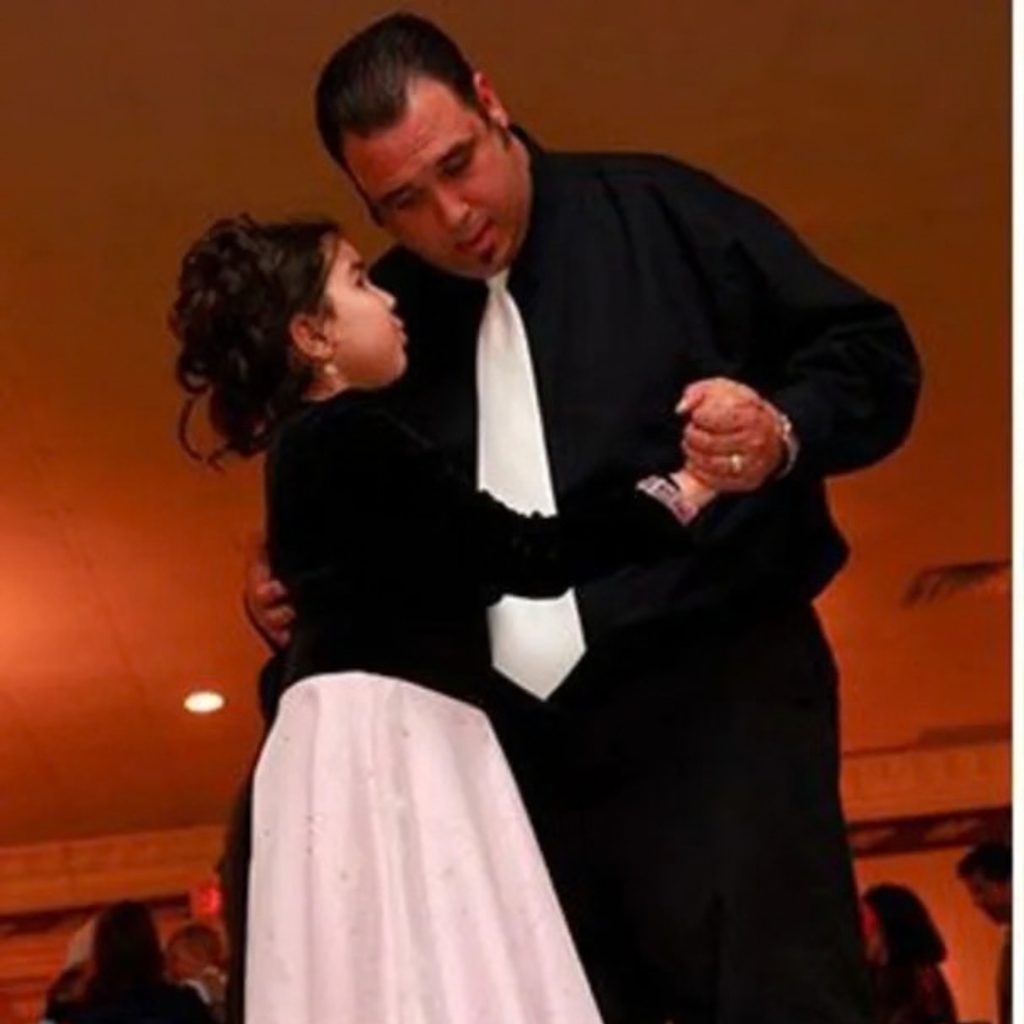
His daughter, Skyler, had spent six years fighting brain cancer. A few weeks before she died at age 12, father and daughter talked about something Doug had never finished: high school.
Doug had dropped out in ninth grade.
Skyler asked him to make her a promise. After she was gone, he would earn his GED.
At the time, Doug had also lost his business and home after taking time away from work to care for his daughter. He was unemployed and trying to figure out what came next when he was directed to the OhioMeansJobs Center and connected with Project Learn.
Skyler died on November 2, 2011.
The following year, Doug kept his promise.
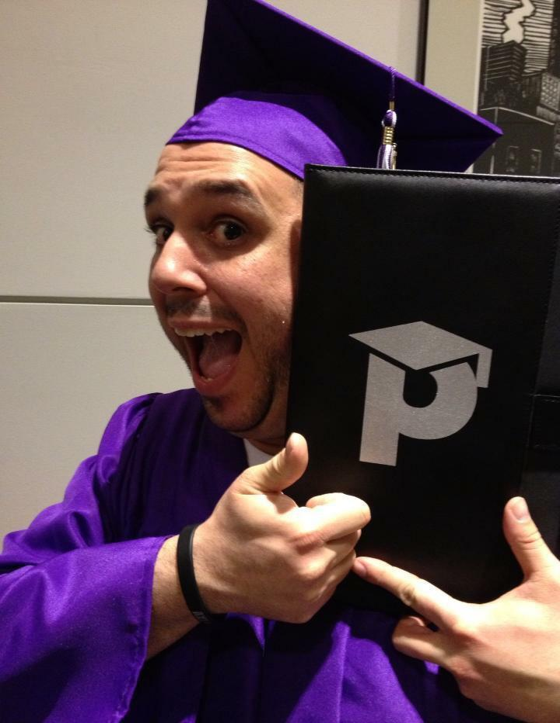
He earned his GED.
“When I obtained my GED, it was a major lift off my shoulders,” Doug said. “I was also able to fulfill the promise I made to my daughter.”
Doug’s promise to Skyler and his return to education have been shared before through news and university features.
But earning his GED turned out to be only the beginning.
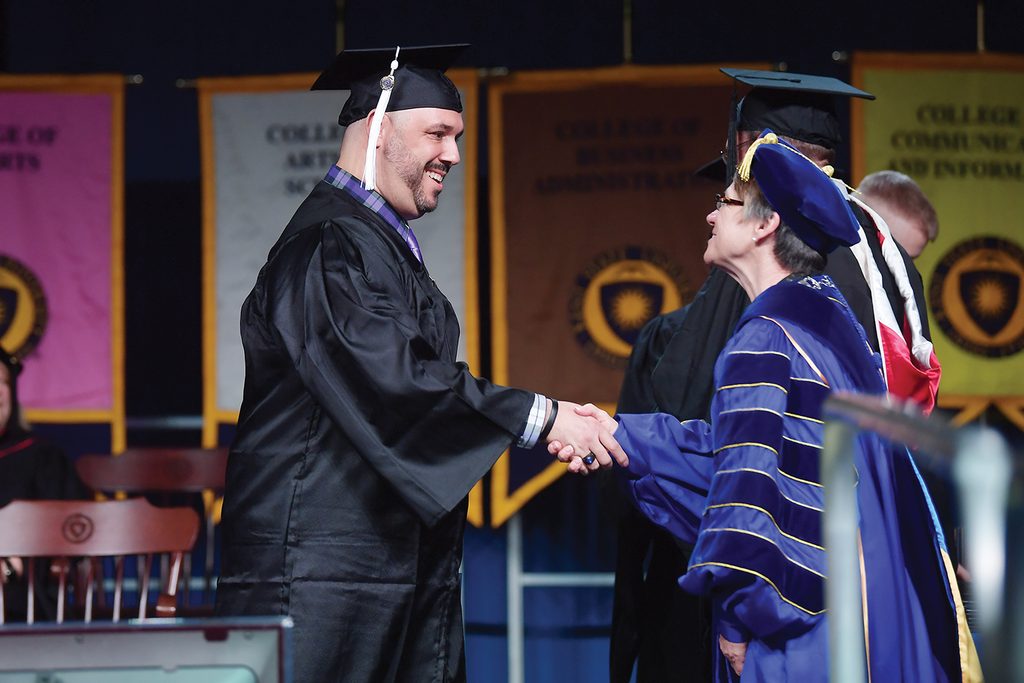
Through Project Learn, Doug connected with Kent State University’s GED Scholars Initiative.
College wasn't something he had imagined for himself.
He attended a weeklong program about going to college and, almost unexpectedly, found himself taking the next step.
“I never thought [college] was in my worldview ever,” Doug said.
At Kent State, Doug studied Applied Conflict Management with a minor in Criminal Justice. He was also working full time as a lead investigator, sometimes working around 70 hours a week while carrying a full course load.
He earned his bachelor’s degree.
Then he kept going.
In 2019, Doug earned a master’s degree in criminal justice.
Today, he is pursuing a Ph.D.
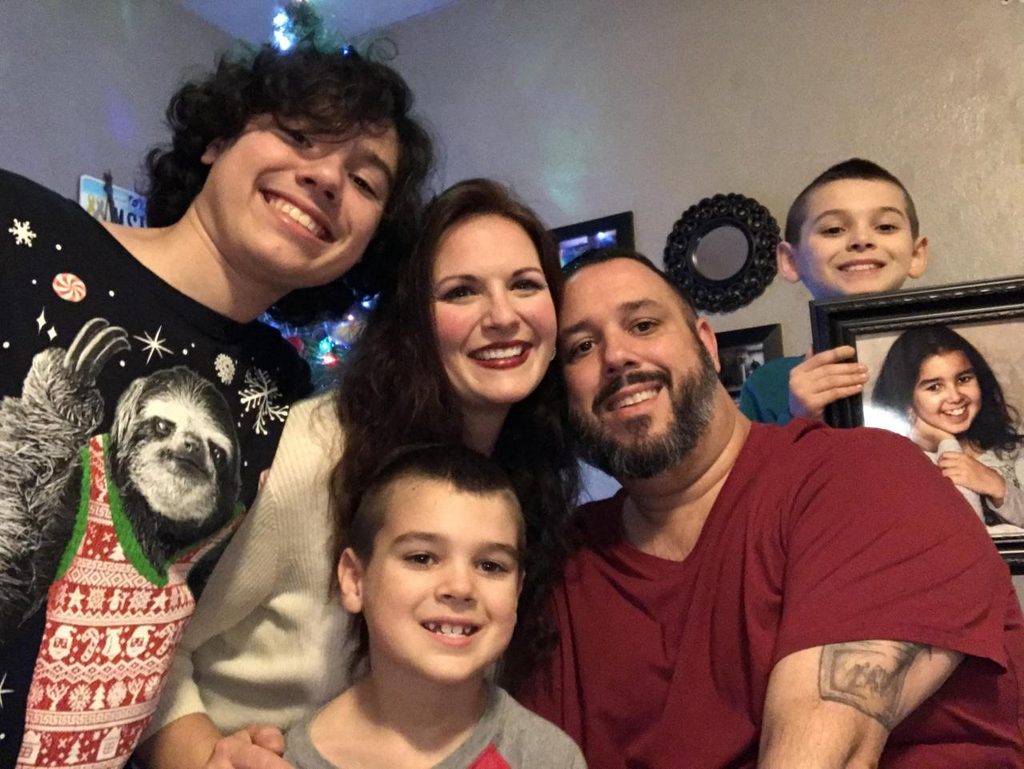
Doug doesn't describe the Ph.D. as something he needs for his current job.
This one is personal.
“I just want to prove to myself that I can do it.”
For Doug, that means proving something about the student he once was, too.
“I just want to prove that the kid who dropped out of school in the 9th grade, who failed several grades, and had dyslexia could make it.”
At 35, earning a GED had once seemed almost impossible to him.
Now, the same person is working toward a doctorate.
But education didn't only change what Doug believed he could accomplish academically. It also helped shape where he wanted to put his experiences to work.
Changing Things From Within
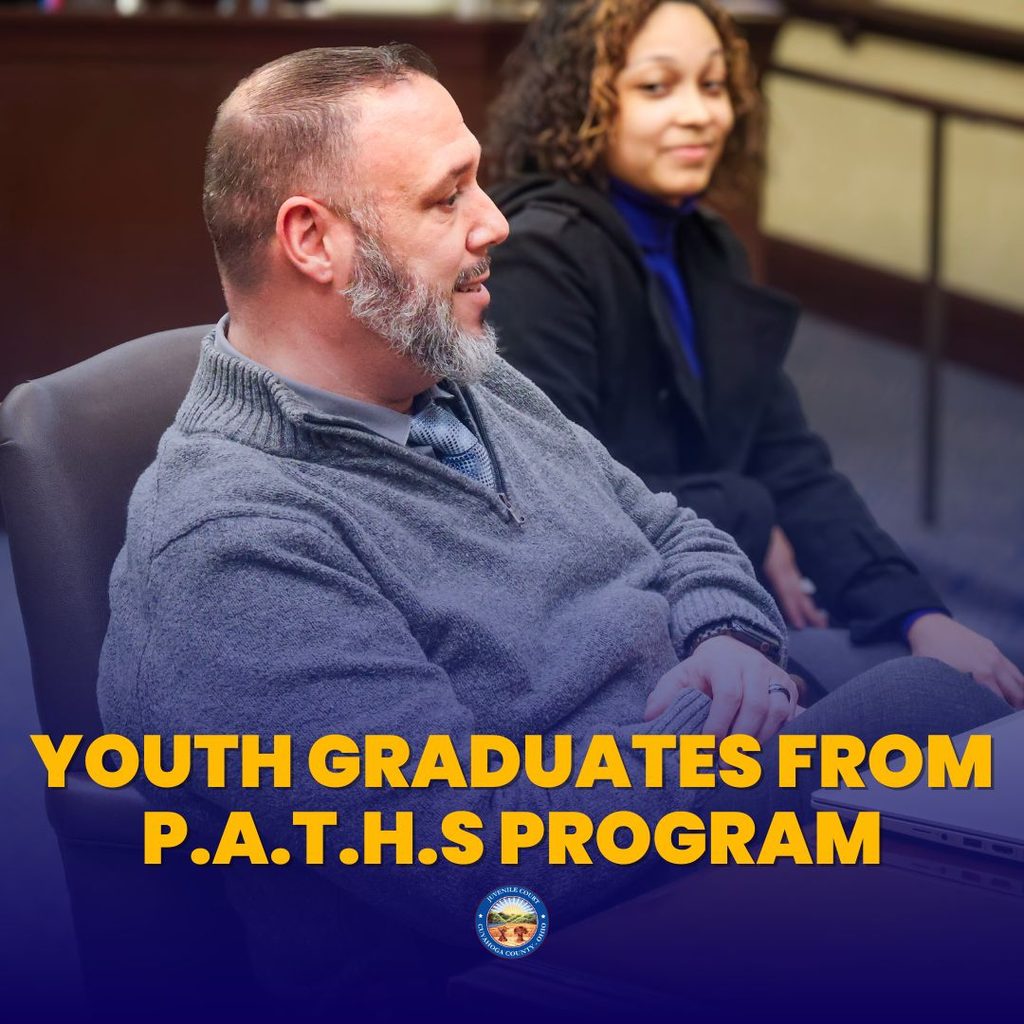
Doug’s career eventually led him into juvenile justice.
After working with the Summit County Prosecutor’s Office, he joined the Cuyahoga County Juvenile Court. He began as a probation officer and later moved into his current role as Specialized Dockets Coordinator.
For Doug, the work is deeply personal.
He describes himself as someone who has always wanted to protect people and help those in need. Experiences from his own life also shaped his desire to work with young people and families.
As a probation officer, Doug worked directly with youth. Some have stayed in contact with him years later.
When people suggested he return to probation because of that direct connection, Doug saw another way to make a difference.
“In the role I am in, Specialized Docket Coordinator, I can help make a change from within the system,” he said.
Working alongside his team, Doug wants young people and their families to understand that a difficult moment does not have to determine the rest of their lives.
It is a message shaped by his own experience.
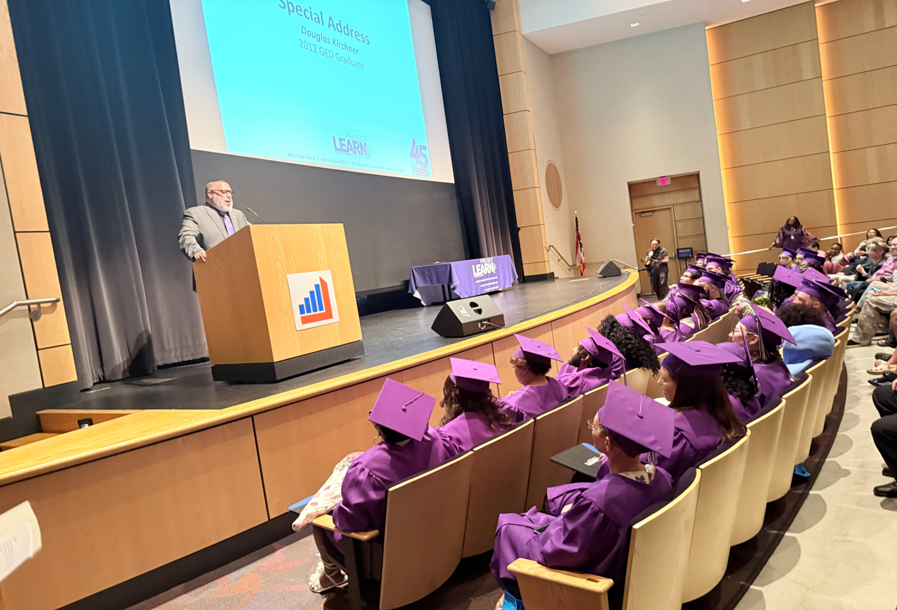
In July 2026, Doug’s journey brought him back to Project Learn.
He joined students, families, staff, and community members at Project Learn’s Recognition & Graduation Ceremony, this time as one of the speakers.
Years earlier, Doug had been the adult learner wondering what could come next.
Now he was standing in front of adults beginning their own next chapters.
The experience stayed with him.
After the ceremony, Doug shared how much it meant to be part of the GED process. He also began thinking about ways to be more proactive in connecting people who want a GED with opportunities to earn one.
His connection with Project Learn had come full circle.
He returned not simply as a former student, but as someone thinking about how he could help open doors for others.
The Rest of the Story Isn't Written
There is something Doug often tells young people through his work at the court.
It comes from a life that has given him plenty of reasons to believe it.
“Your past does not define you.”
But Doug doesn't stop there.
“After you know what needs to be done and are given the tools to succeed, that is where the defining happens. You will be defined by what you do in the future.”
And then comes the part that may say the most about Doug’s own journey:
“Your past is but a chapter in your life, and the rest of the story is not written, so make it a good ending.”
Doug’s story isn't finished either.
More than a decade after earning his GED, he is still learning, still serving, and still looking for ways to help someone else see what might come next.
